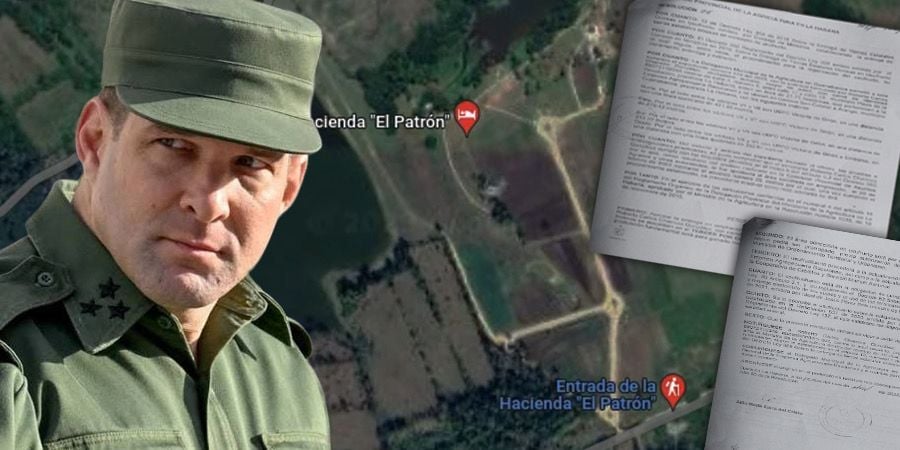
—Colonel Ibáñez and I want to come see you about an assignment from Raulito. Can we stop by now? —asked First Colonel Carlos, one of the senior officials of the Technical Directorate of Investigations (DTI) of Cuba’s Revolutionary National Police (PNR), over the phone.
—I’ll be waiting for you here —replied engineer Esmeregildo Martínez Gámez, who at the time was the Ministry of Agriculture’s delegate in Havana.
Neither officer gave his full name. Martínez knew them as First Colonel Carlos and Colonel Ibáñez, and that is how he identifies them today. Introducing themselves to civilians using only their rank and a first name—or a surname—is common practice among officers of the Ministry of the Interior (MININT).
Martínez did not need to ask who Raulito was. Among those officers, the diminutive was reserved for Raúl Guillermo Rodríguez Castro, Raúl Castro Ruz’s grandson, bodyguard, and trusted aide, also known as El Cangrejo. When a request made in his name reaches any Cuban institution, it is not interpreted as a favor that can be granted or denied.
About 40 minutes later, the two military officers entered the headquarters of Havana’s Provincial Agriculture Delegation accompanied by a young man whom they introduced as Roberto Carlos Chamizo González.
That day, Chamizo—slim, with dark hair and a carefully trimmed beard—was wearing shorts, a white shirt, and designer sneakers. Everything about him—the immaculate clothes, his polished appearance, the confidence with which he moved among the officers—contrasted with the farmers who normally visited those offices. As he shook his hand, Martínez thought the man looked more like a model than someone accustomed to working the land.
The assignment was concise: the delegate was to urgently legalize 6.27 hectares of land, ostensibly for agricultural use, that Chamizo was already occupying in the municipality of Habana del Este. The officers insisted that the paperwork had to be completed as quickly as possible because the young man would be leaving the country to “carry out missions.” It was important that nothing go wrong: this was a personal request from Raulito.
—This assignment must be handled with the utmost discretion, because it is a matter of national security —First Colonel Carlos warned him, Martínez recalls.
The delegate knew he could not refuse and asked no questions, although from the outset he detected several irregularities. In Cuba, land cannot be donated, nor can usufruct rights be transferred at someone’s discretion, as Chamizo claimed was how he had obtained the property. Because the land was designated for agricultural use, it also could not be used for anything other than food production, an activity in which the young man did not appear to be interested. Moreover, the entire process was supposed to begin at the municipal level, where the land had to be officially declared idle.
The request met none of those basic requirements. But Martínez, who until then had never heard of Chamizo and was only now learning that the land had changed hands, understood that it would not be processed like an ordinary farmer’s application either. Two senior PNR officers had come to his office to tell him that the matter concerned national security and that Raúl Castro’s grandson was behind the request.
On August 15, 2021, Martínez signed Resolution 347, which legalized Chamizo’s usufruct rights over the 6.27 hectares for a period of 20 years. Those rights could be renewed after that period.
That is how a tourism business known as Hacienda El Patrón came into being on San Gabriel Road, in the municipality of Habana del Este, about a 30- to 35-minute drive from downtown Havana—a business linked to the country’s largest corporate conglomerate, GAESA.
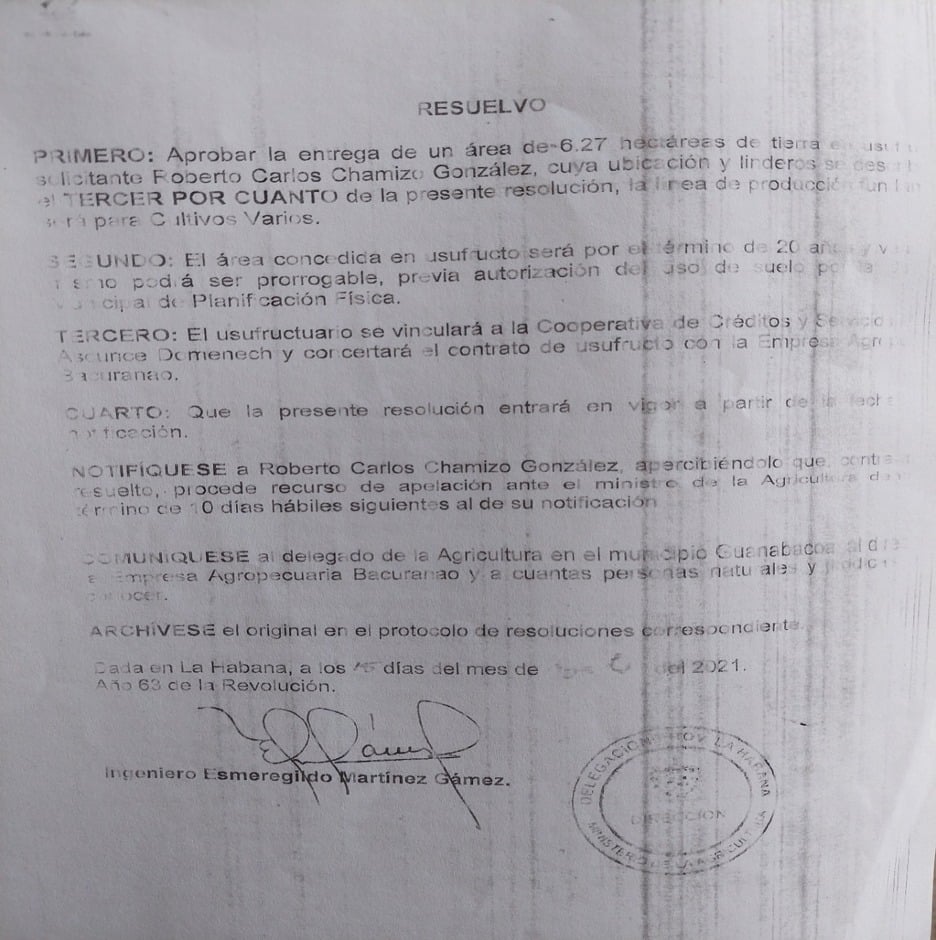
Engineer Martínez initially believed this was an exceptional concession and that he would never hear about Chamizo again. He was wrong. The call he received in early July had not set in motion an isolated administrative procedure, but rather a long chain of favors, pressure, and arbitrary actions that various officers would convey in the name of El Cangrejo.
The Heir to the Island
For years, Raúl Guillermo Rodríguez Castro was known primarily as Raúl Castro’s grandson and head of his personal security detail. Nicknamed El Cangrejo because of an abnormality he was born with in one of his hands, he accompanied his grandfather to official events and on trips, almost always several steps behind him and without making public statements.
In recent months, however, he has emerged as one of the powerful figures operating behind the scenes within Cuba’s opaque regime.
Although he holds no known public office, Raulito, or El Cangrejo, has become one of the regime’s principal interlocutors with Washington.
As international media reported in February 2026, Raúl’s grandson held discreet talks with U.S. Secretary of State Marco Rubio during a summit in Saint Kitts and Nevis.
In April, El Cangrejo met again with U.S. representatives in Havana, and on May 14 he took part in a meeting with CIA Director John Ratcliffe during an unusual high-level visit to the island.
Finally, in July, Raulito partially stepped out of the shadows and told USA Today that he was willing to negotiate with any representative designated by the United States, including Donald Trump.
El Cangrejo’s power, however, is not only political; it is also economic.
There are two key connections in his life. He is the son of Débora Castro Espín and therefore Raúl Castro’s grandson. But he is also the son of Major General Luis Alberto Rodríguez López-Calleja, who headed GAESA until his death in 2022 and transformed the military conglomerate into Cuba’s dominant economic power.
There has been no public announcement that El Cangrejo is managing the business empire built by his father.
However, a coalition of media outlets documented in 2025 Raulito’s close ties to GAESA’s current leadership. According to that investigation, Raúl Castro’s grandson accompanied Brigadier General Ania Guillermina Lastres Morera, his father’s successor at the helm of the military conglomerate, on at least one private flight to Panama.
And, as the Hacienda El Patrón case described above shows, El Cangrejo has used his influence to benefit GAESA’s businesses and those within his circle, intervening in matters that formally fall under the authority of ministries, local governments, or state-owned companies.
His name alone is enough to open doors, mobilize officials, and secure privileges, even when his interests in the tourism sector conflict with priorities as crucial to the country as food production.
The Hacienda El Patrón case not only illustrates how Cuba’s institutional rules are overridden to grant privileges to private individuals connected to the Castro family. It also exposes how some of the economic measures currently being promoted by regime figures, including El Cangrejo himself, could serve, among other things, to further facilitate the appropriation of state assets from which they themselves have benefited.
This investigation began with the testimony of Esmeregildo Martínez Gámez, former Agriculture delegate in Havana and a direct participant in several of the administrative proceedings described here.
Over the course of several months, CubaNet worked with him to reconstruct the sequence of events and pressures surrounding the expansion of Hacienda El Patrón. His account was cross-checked against those of other people familiar with the events. Dates, positions, and procedures were reviewed, and the reported episodes were verified against the administrative proceedings carried out before various institutions. Internal documents from Cuban government agencies supporting key portions of the testimony were also examined—an unusual level of access for independent journalism on the island, where this type of information generally remains beyond public reach. With the sources’ authorization, some of those documents are reproduced in this report.

A Larger Estate for El Patrón
Hacienda El Patrón began to take shape in 2020, when Chamizo—who studied at a MININT school and was later trained by the Counterintelligence Department—began accumulating agricultural land in Habana del Este that had previously been granted to farmers.
According to documents and testimony reviewed by CubaNet, some of those transactions were presented as “donations” made by the farmers to Chamizo, even though the farmers did not own the land, which belonged to the state, but merely held rights to use it.
As a result, in 2021 Esmeregildo Martínez Gámez, then an agricultural-sector official in Havana, came under pressure to legalize the arrangement. Invoking El Cangrejo’s name, officials demanded that he authorize the transfer of 6.27 hectares of land to Chamizo, the equivalent of about nine soccer fields.
The operation was marred by irregularities from the outset. Martínez was required to accept the transfer of state-owned land as though it were private property and to grant land designated for agricultural production to a private individual who had no experience in the sector and who, in reality, intended to use it for tourism and recreational activities.
This marked the beginning of a series of arbitrary decisions that would accompany the expansion of El Patrón.
Over time, the authorities also allowed Chamizo to fence off a reservoir that was not part of the land granted to him and that was used to provide drinking water for buffalo belonging to a state-owned enterprise.
In addition, according to the sources consulted, the horses that are now used for the tourist rides offered by the hacienda were also provided to the young man by a state entity.
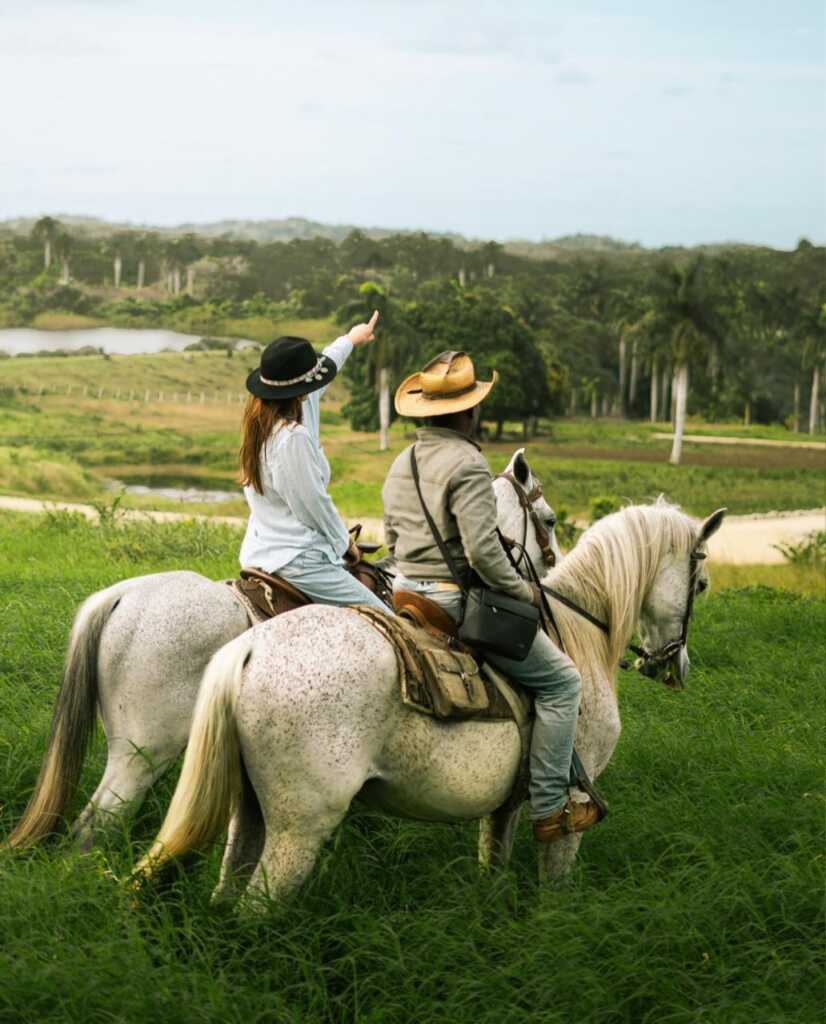

By 2022, Chamizo had already built several dining and recreational facilities on the property. Those investments, however, did not translate into food production, the primary purpose for which the Cuban state grants land in usufruct.
The 6.27 hectares did not appear to be enough, either: the businessman sought to incorporate additional areas—dairy farms, facilities, and resources belonging to the state-owned Bacuranao Agricultural Enterprise.
Martínez, who had just taken over as head of that enterprise at the time, once again found himself facing Chamizo’s demands. By telephone, the businessman told him that he wanted all the land and dairy farms surrounding the hacienda in order to develop an ecotourism project catering to foreign visitors.
Before responding, Martínez, who by then knew whom he was dealing with, consulted Yuliet Caballero Reina, head of the Victoria de Girón Buffalo Genetics Base Business Unit (UEB) and the legal representative of the dairy farms and land designated for scientific buffalo-development programs in the area.
Caballero explained that she had already had problems with the owner of El Patrón.
By fencing off without authorization a reservoir that the state enterprise’s buffalo had previously been able to access, Chamizo had prevented the animals from drinking. Driven by thirst, however, the buffalo would break through the fence to reach the reservoir, prompting complaints from the businessman.
In addition, the owner of El Patrón had already demanded that she hand over some of the enterprise’s facilities to him. Caballero had refused, arguing that the request had no legal basis and would mean losing some of the UEB’s most productive dairy farms, which would hurt the enterprise’s economic performance and its workers’ incomes.
Decree 350/2018, the implementing regulations for Decree-Law 358/2018, establishes specific protections for the facilities and infrastructure of state livestock genetics programs. Idle land may be granted in usufruct so that it can be brought into agricultural production, but Chamizo was not seeking abandoned land: he wanted to take over areas that were already productive, while the land he had previously received was being used primarily for recreational activities.
Martínez, as Caballero had done, tried to stop the expansion of Chamizo’s estate. He explained to the businessman that before receiving additional land, he needed to make productive use of the land he already had, fulfill his contractual obligations, and correct the violations that had been identified, including blocking access to the reservoir.
“He replied that he was independent, that he could do whatever he wanted on his land, and that the reservoir had been given to him by ‘the bosses.’ By ‘the bosses,’ he meant El Cangrejo and [Manuel] Marrero [Cruz, the regime’s prime minister],” Martínez told CubaNet.
Furious, Chamizo warned him that he would personally ask the prime minister to call Agriculture Minister Ydael Jesús Pérez Brito, who would then order that the transfer be authorized. That is precisely what happened. Shortly afterward, the minister called the provincial delegate to pressure him.
While demanding more state-owned land, Chamizo was being publicly portrayed as an agroecological producer. In June 2022, several international media outlets published an identical, overtly promotional piece in which the young businessman presented himself under a false identity. Using the name Carlos Milán, he told the media that he grew sweet potatoes and green beans, shared his harvests with neighbors and relatives, and delivered food to hospitals.
The image being promoted contrasted with what was actually happening on the ground: Hacienda El Patrón was, in reality, a tourism business. Chamizo was attempting to take over productive land, dairy farms, and resources belonging to a state enterprise, not to produce food but to attract tourists.
By early 2023, expansion of the estate was no longer merely an aspiration voiced by Chamizo. The request began mobilizing some of the most senior officials in the Cuban government. Jorge Luis Tapia Fonseca, then deputy prime minister, and Ydael Jesús Pérez Brito, minister of agriculture, personally visited El Patrón to support Chamizo’s business.
Martínez, who remained in charge of the Bacuranao Agricultural Enterprise, was summoned to join the visit. According to his testimony, Tapia explained in front of those present that he had come on instructions from his superiors to help Chamizo expedite the pending procedures. The objective, he said, was to grant additional land to Hacienda El Patrón in order to “take care of the bosses.”
The new request for land far exceeded the previous concessions. Tapia and Pérez Brito wanted Bacuranao to prepare the transfer of more than 20 hectares belonging to the buffalo genetics program.
These were not abandoned or unproductive lands, but state-owned areas already in active use, with dairy farms, animals, workers, and facilities associated with one of Havana’s principal livestock programs.
Bacuranao was not a minor enterprise, either. In 2018, the official press reported that the company accounted for 86% of the milk, 78% of the meat, and 48% of the root vegetables, vegetables, grains, and fruit produced in the capital.
Martínez refused to take responsibility for the operation. He warned that a decision of that magnitude had to be communicated to him in writing and pointed out that the transfer would affect the enterprise’s assets and economic performance. He was not willing, he said, to carry it out on the basis of a verbal instruction.
Hours later, a ministerial commission was created to handle Chamizo’s requests. According to Martínez, the commission was headed by then-Deputy Agriculture Minister Maury Echevarría Bermúdez. And once again, on El Cangrejo’s orders, Chamizo was granted 21.71 hectares on April 12, 2023.
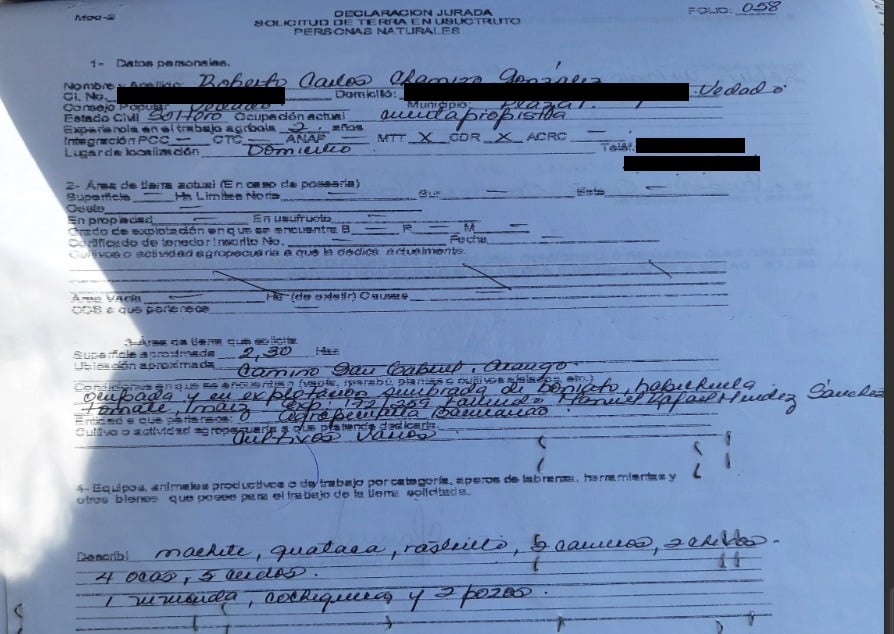
By mid-2023, Chamizo was the legal usufructuary of 27.98 hectares in Habana del Este. In addition, another 2.3 hectares were recorded in the young man’s name in a case file that appeared out of nowhere. Chamizo was granted 30 hectares—nearly five times the amount granted, on average, to a farmer just starting out, according to Martínez.
As of the completion of this report in September 2026, Chamizo is awaiting the legalization of another 70 hectares and has gradually been taking possession of some of them.
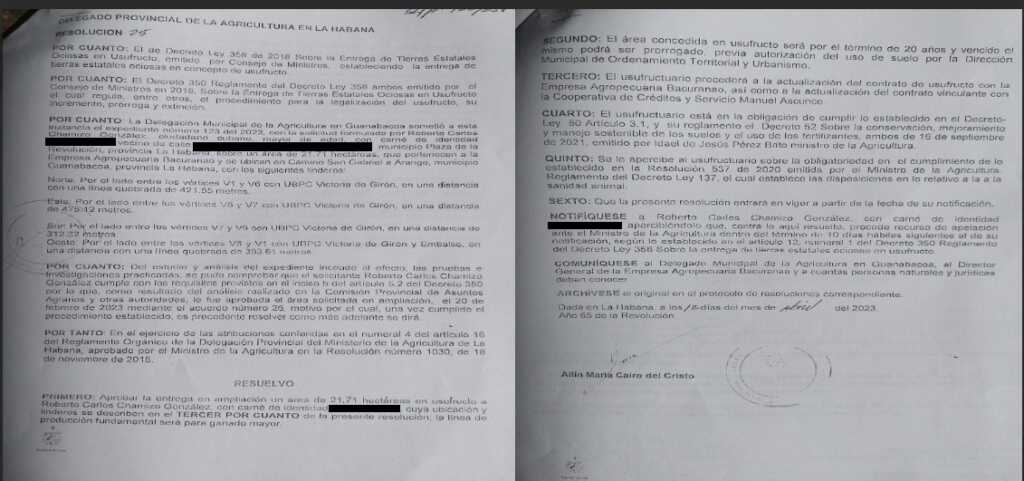
The treatment afforded to the businessman stands in stark contrast to that received by ordinary farmers. While El Cangrejo’s friend demanded land already in productive use to expand a tourism project, some 20 applications from farmers seeking land to produce food remained pending in Bacuranao’s offices. They had to go through the regular procedure and wait for a response from the state bureaucracy; Chamizo’s demands, by contrast, mobilized ministers, deputy ministers, and a deputy prime minister.
“You can’t even enter that estate. It is off-limits to any real inspections and is protected by the country’s top officials,” a former Bacuranao employee, whose identity is being withheld to prevent reprisals, told CubaNet.
The appropriation of those areas is even more serious in light of the food crisis Cuba is experiencing. In 2025, the government itself acknowledged that agriculture and livestock production had declined by 53.4% over five years, while the World Food Programme warned that food insecurity remained a significant problem, exacerbated by inflation, shortages, and the prolonged economic contraction.
In a country where producing food has become a national emergency, every hectare of arable land, every dairy farm, and every source of water is an essential resource. Yet some of the best land belonging to the Bacuranao Agricultural Enterprise, along with a reservoir needed for its buffalo herd, fell prey to the ambitions of a “private” businessman who was not known for producing food but rather for publicly flaunting his close ties to El Cangrejo, according to multiple sources consulted.
In addition to receiving land, another privilege Chamizo obtained was the ability to import plant material without following sanitary protocols. Documents reviewed by CubaNet indicate that Marrero Cruz himself spearheaded the arrangements with the Russian company CGC to promote grape cultivation at El Patrón.
On September 27, 2024, seedlings of three grape varieties intended for planting at the hacienda arrived at Havana’s José Martí International Airport. They did not have the required international phytosanitary certificate. Despite this, the plants were allowed to leave the terminal, transported to El Patrón, and planted there—something other producers would not have been permitted to do.
Days later, the Central Plant Quarantine Laboratory detected three types of bacteria in the seedlings. The Center for Genetic Engineering and Biotechnology confirmed the findings in February 2025, and a month later, the destruction of all the varieties was ordered.
GAESA-Promoted Glamping
Today, Hacienda El Patrón presents itself as a luxury oasis built in the middle of the Havana countryside. Carefully maintained paths wind through gardens of palm trees, flowers, and lawns before reaching a swimming pool surrounded by lounge chairs and hammocks.
The reservoir where the state-owned buffalo herd once drank, and which Chamizo appropriated, is presented to visitors as a peaceful lake offering kayaking and other water activities.
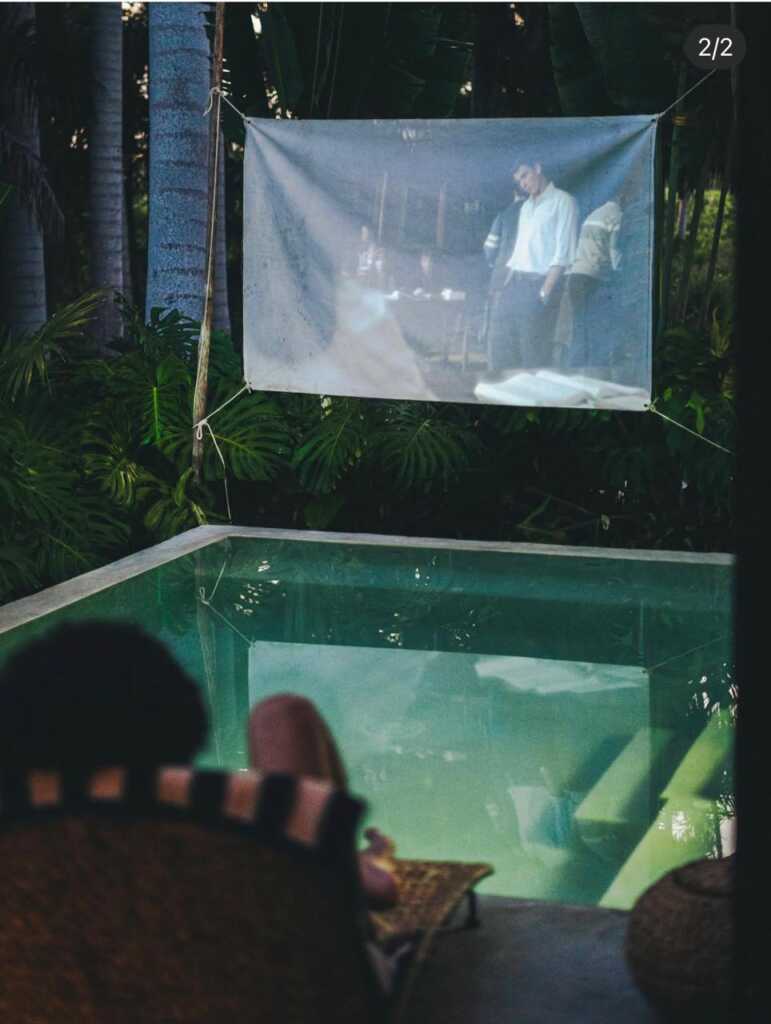
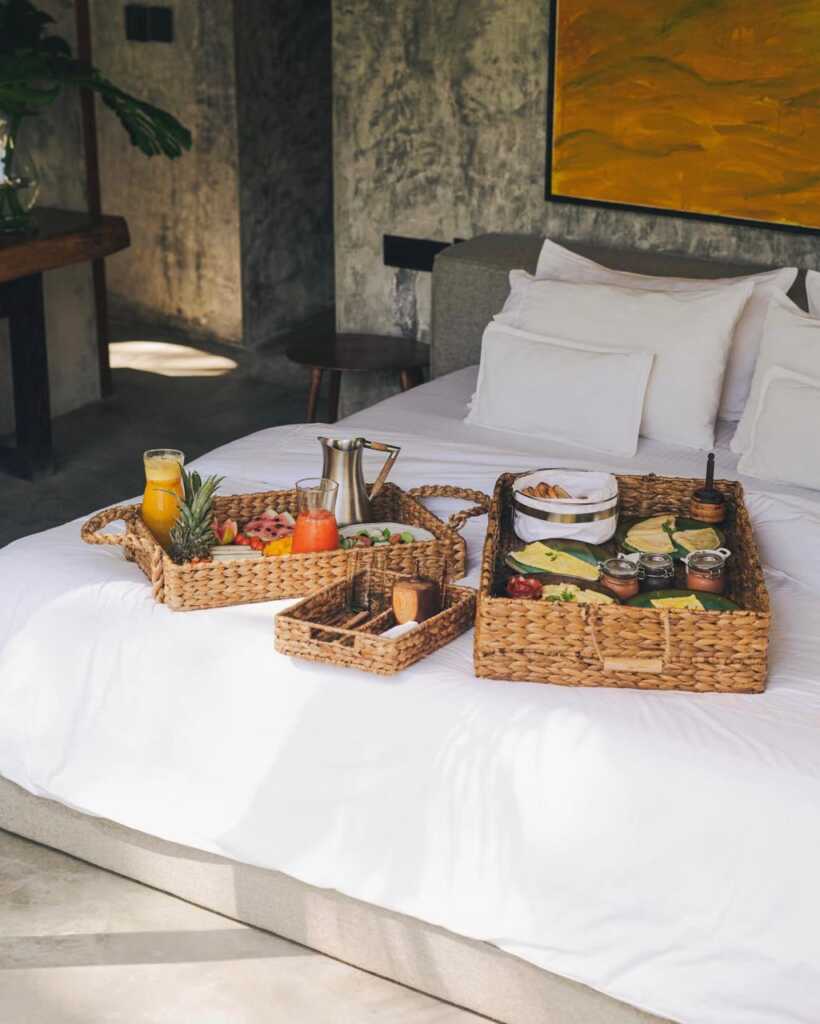
White horses roam the pastures while the business advertises outdoor massages, yoga sessions, and exclusive transportation services.
The restaurant offers a sophisticated take on country life, with elegant tables, cocktails, cigars, and dishes of roast pork, congrí, fried plantains, and yuca with mojo, promoted under a “farm-to-table” concept.
The main symbol of opulence is its glamping accommodations: large tents converted into guest rooms and villas with private pools.


The décor deliberately combines the rustic with the exclusive to create the appearance of untouched nature without sacrificing air conditioning, personalized service, or the amenities of a luxury hotel.
As CubaNet documented, the hacienda is the only “private” business that Gaviota Tours, which belongs to the GAESA military conglomerate, has included in its excursion catalog.
The agency typically directs its tour packages toward hotels and facilities controlled by the military group itself.
The excursion to the hacienda costs $109 per person. Two Gaviota operators confirmed that sales representatives were instructed to give the excursion priority when offering activities to tourists visiting the island.
Thus, the same state that pressured officials to hand over the land and mobilized senior officials to make it happen ultimately used its tourism infrastructure to promote the business.
Chamizo, Raulito, and GAESA: A Triangle of Power and Business
The close relationship between Chamizo and Raúl Guillermo Rodríguez Castro is supported not only by Martínez’s testimony or by the accounts of farming families interviewed by CubaNet.
An episode in April 2026 publicly exposed a relationship that until then had operated primarily through verbal orders, private visits, and administrative dealings.
U.S. government sources cited by Martí Noticias said at the time that Chamizo traveled to the United States carrying a letter attributed to El Cangrejo and addressed to President Donald Trump, with the intention of establishing a channel of communication outside official diplomatic channels.
U.S. authorities sent him back to Cuba because he did not have recognized diplomatic status.
The episode revealed both the closeness between Chamizo and El Cangrejo and the efforts both men are making to ensure that the regime—and the businesses they have built—survive at a time of particular weakness.
In fact, El Cangrejo is involved in more than diplomatic efforts. Raúl Castro’s grandson has also promoted the 176 economic measures, as he himself said in an interview. These reforms, recently approved by the government, seek to expand the private sector’s participation in the country’s economy.
Some of these measures would facilitate or legalize precisely the kinds of appropriation of state assets that have benefited the regime’s elites for years.
Among other things, the new regulations will allow private companies to be granted usufruct and surface rights over state-owned land, construct buildings intended for service businesses, combine multiple activities under a single company, and transfer areas with existing facilities to the tourism sector.
An estate legally established to produce food could now be used for lodging, dining, excursions, and ecotourism without formally abandoning its agricultural activities. In other words, other businesspeople close to the leadership could replicate, without obstacles, the formula Chamizo and Raulito followed at Hacienda El Patrón.
Although the measures do not in themselves erase previous violations, they create the legal mechanisms through which the state could regularize, without impediment, the assets accumulated by Chamizo and others close to those in power—or by those who themselves wield that power.
GAESA, El Cangrejo’s Inheritance
At the center of it all is GAESA, the military conglomerate that controls much of the most profitable sectors of the Cuban economy.
Although El Cangrejo does not publicly hold a position equivalent to the one his father held at GAESA, his family ties, his closeness to Raúl Castro and Marrero Cruz—a military officer who also came from GAESA—and his influence over economic and political affairs place him among the potential heirs to the power structure built around the conglomerate.
Chamizo, for his part, manages businesses that operate within spaces controlled by GAESA.
The most visible example is El Patrón, but Chamizo’s relationship with the military business network is not limited to the hacienda. As a previous CubaNet investigation revealed, Chamizo also manages Mía Culpa Havana, a restaurant located inside Havana’s Iberostar Grand Packard Hotel, which is also owned by GAESA.
The restaurant’s chef, Ramsés González Méndez, also designed El Patrón’s menus and is listed as an authorized representative of RCCH Investment S.L., a company established by Chamizo in Spain.
These connections thus link his private businesses to facilities, services, and tourism channels belonging to the military conglomerate.
GAESA’s lack of transparency—its structures, financial statements, and internal decision-making mechanisms are beyond public scrutiny—makes it impossible to determine where state assets end and where the private use of those resources by the elite managing the conglomerate begins.
That same elite is responsible for erasing the boundaries between state and private property.
El Cangrejo was not only cited as the authority who ordered officials to favor the hacienda; he has also been seen at the estate on several occasions.
In fact, the dictator’s grandson has not only vacationed at the estate. He has also used state-owned facilities in the same area as private recreational spaces.
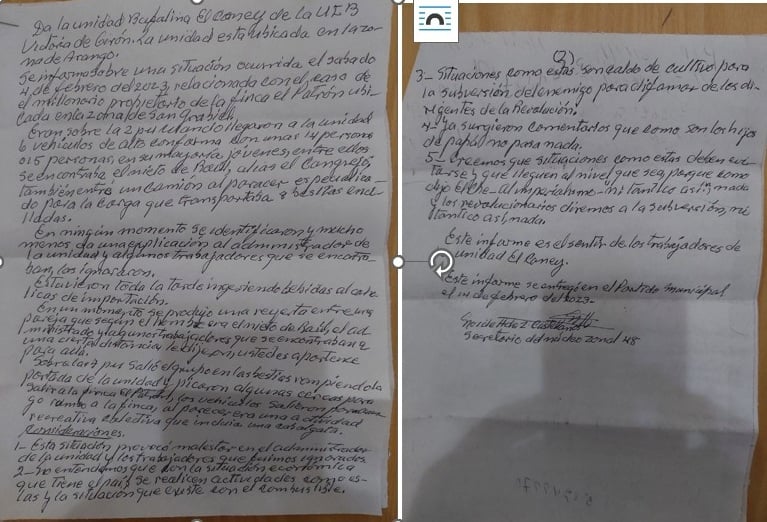
One such visit was documented in a handwritten report by Zonal Branch 48 of the Communist Party of Cuba (PCC), to which CubaNet obtained access. The document describes El Cangrejo’s arrival on Saturday, February 4, 2023, at the El Caney buffalo unit, which belongs to the Bacuranao Agricultural Enterprise and is located in the Arango area, near Hacienda El Patrón.
It was approximately two o’clock in the afternoon when a convoy of six “high-end” vehicles entered the facility. Between 14 and 16 people were traveling in them, “mostly young people.” Among the visitors, the report specifically identified Raúl Castro’s grandson.
Alongside the vehicles came a truck belonging to the National Enterprise for the Protection of Flora and Fauna. It was carrying eight saddled horses. The group had not come to inspect the dairy farm or inquire about livestock production: they arrived prepared to spend the afternoon in the countryside, ride horses, and drink imported alcoholic beverages.
According to the document, none of the visitors identified themselves or explained to the workers why they were there. They entered and occupied a state-owned facility for hours as though it were private property. The scene caused resentment among the workers, who watched as a group of young people, protected by the identity of one of their members, used the assets of a public enterprise for their own entertainment with impunity.
The unease extended even to members of the PCC. “Situations like these are a breeding ground for enemy subversion, for distancing us from the leaders of the Revolution,” the secretary of Zonal Branch 48 warned in his report.
He then repeated a phrase that, according to his account, had begun circulating among the workers: “Since they’re daddy’s children, nothing happens to them.”
* CubaNet requested comments from Roberto Carlos Chamizo González and the Ministry of Agriculture via WhatsApp and email. As of publication, it had received no response.
** As a result of pressure from Raúl Guillermo Rodríguez Castro, El Cangrejo, and Roberto Carlos Chamizo González, Esmeregildo Martínez Gámez not only lost his job but also faced criminal proceedings. He is currently living in exile and has just published his memoirs, in which he recounts the harassment that he and his family endured.