


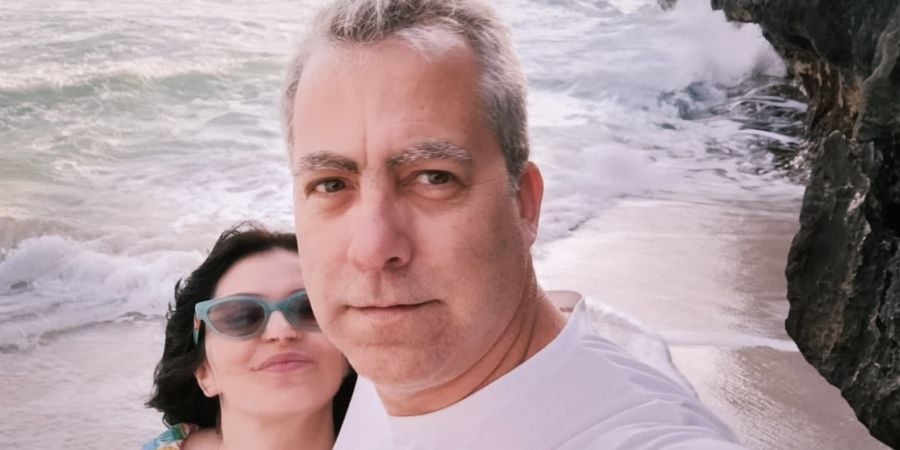
MIAMI, United States — Senén Casas Más participated in more than 40 international missions alongside Alejandro Castro Espín, son of Raúl Castro Ruz and former adviser to the National Defense and Security Commission, according to an investigation by Martí Noticias published on August 24 and based on classified information obtained in Cuba.
The trips were reportedly made using diplomatic passports issued by the Ministry of the Interior (MININT) and included travel to Russia, China, Panama, and France.
Luis Domínguez, a researcher with the Foundation for Human Rights in Cuba who had access to the information provided to the news outlet, summarized the extent of the travel as follows: “Using diplomatic passports issued by the Ministry of the Interior, Casas Más has carried out more than 40 missions (…) directly accompanying Alejandro Castro Espín.”
Casas Más’s ties to Castro Espín had been reported at least as far back as 2014. A study by the University of Miami’s Institute for Cuban and Cuban-American Studies, prepared by historian Pedro Roig and reported at the time by CaféFuerte, identified him as the son of General Senén Casas and as “Alejandro Castro’s second-in-command.”
Cuba’s official press publicly documented the roles of Alejandro Castro Espín and Juan Francisco Arias Fernández within the National Defense and Security Commission. In September 2015, Granma identified the former as an adviser and the latter as deputy adviser to that body in a report on a meeting between Raúl Castro and then-U.S. President Barack Obama at the United Nations. In March 2016, the newspaper again identified Castro Espín as an adviser to the Commission during Obama’s visit to Havana.
The Martí Noticias investigation also places Major Alaim Peña Santiesteban and Arias Fernández within Casas Más’s circle. The outlet’s sources attribute nearly 30 official missions abroad to Arias Fernández alongside Casas Más and describe him as a military strategist and cybersecurity analyst responsible for preparing national security reports and threat assessments for the country’s ruling leadership.
Casas Más is married to Spanish journalist Ana Hurtado Martínez, an active defender of the Cuban regime. Domínguez said Hurtado had begun the process of obtaining permanent residency on the Island and had spent several months in properties located in Havana’s Plaza de la Revolución and Playa municipalities. Martí Noticias also cited people close to the family as saying that she frequently travels to Mexico, Venezuela, and Spain.

In 2022, Granma described Hurtado Martínez as a Spanish journalist and filmmaker who had resumed her profession to defend “Cuba” and published her statements in support of the socialist system established on the Island. Hurtado has also regularly published articles supporting the regime in Cubadebate and other official and pro-Castro outlets.
Senén Casas Más is the son of Major General Senén Casas Regueiro and the nephew of Army Corps General Julio Casas Regueiro, two figures closely associated with Raúl Castro Ruz. A biography published this August by the official newspaper La Demajagua notes that his father joined the Frank País Second Eastern Front in 1958 and later served as an aide to the minister of the Revolutionary Armed Forces (FAR), first deputy minister, and chief of the General Staff for more than a decade. At the time of his death on August 6, 1996, he was serving as minister of transportation and headed the group responsible for the state’s policy on the selection and management of government personnel.
Julio Casas Regueiro, the brother of Casas Más’s father, succeeded Raúl Castro Ruz as minister of the Revolutionary Armed Forces in February 2008 and remained in the post until his death in September 2011. According to Reuters, while serving as deputy minister of the Revolutionary Armed Forces (FAR), he built the GAESA business conglomerate, which managed state-owned enterprises in tourism, retail, agriculture, and other sectors. The U.S. Department of the Treasury describes GAESA as a military-controlled umbrella enterprise with interests in tourism, financial investments, imports, exports, and remittances.
Domínguez said that Casas Más and the other members of this network have accumulated hundreds of flights, with the resulting costs of airfare, lodging, and travel allowances paid for with public funds.


